Contraindications:
Hypersensitivity to the active substance or to any of the excipients listed in section Composition or to antihistamines,
Personal or family history of acute angle-closure glaucoma,
Urethroprostatic disorders with a risk of urinary retention,
Child under 15 years old.
Special warnings:
Insomnia can have various causes that do not necessarily require medication. Doxylamine hydrogen succinate, like all hypnotics or sedatives, may worsen a pre-existing sleep apnea syndrome (increasing the number and duration of apneas).
Risk of accumulation: Like all drugs, doxylamine hydrogen succinate persists in the body for a period of approximately 5 half-lives (see section Pharmacokinetic properties). In elderly patients or those with renal or hepatic impairment, the half-life may be considerably longer. With repeated administration, the drug or its metabolites reach steady-state much later and at a much higher level. Only after steady-state has been reached is it possible to assess both the efficacy and safety of the drug.
Dosage adjustment may be necessary (see section Dosage and administration). Elderly patients: H1 antihistamines should be used with caution in elderly patients due to the risk of cognitive impairment, sedation, slowed reaction time, and/or dizziness/lightheadedness, which can increase the risk of falls (e.g., when getting up at night), often with serious consequences in this population.
Precautions for use:
In elderly patients, or those with renal or hepatic impairment, increased plasma concentrations and decreased plasma clearance are observed. Dosage reduction is recommended.
This medicine contains lactose. Its use is not recommended in patients with galactose intolerance, Lapp lactase deficiency or glucose-galactose malabsorption syndrome (rare hereditary diseases).
Pregnancy and Breastfeeding:
Pregnancy: Based on available data, doxylamine can be used during pregnancy at any stage. If treatment is administered late in pregnancy, the atropine-like and sedative properties of this molecule should be considered when monitoring the newborn.
Breastfeeding:
It is not known whether doxylamine passes into breast milk. Given the potential for sedation or paradoxical excitation in the newborn, this medication is not recommended during breastfeeding.
Effects on the ability to drive vehicles and use machines:
Warn drivers and machine operators of the possible risk of daytime drowsiness. The combination with other sedatives, sodium oxybate, alcoholic beverages, or medications containing alcohol should be avoided or taken into account when driving or operating machinery (see section Drug Interactions) as these potentiate the sedative effect of antihistamines. Insufficient sleep further increases the risk of impaired alertness.



 Envoyer un document
 News
News Advice area
 Events & entertainment
 All-night drugstore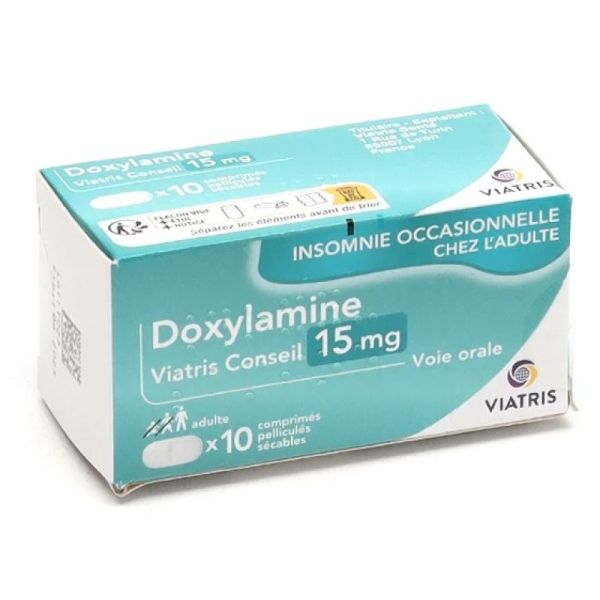
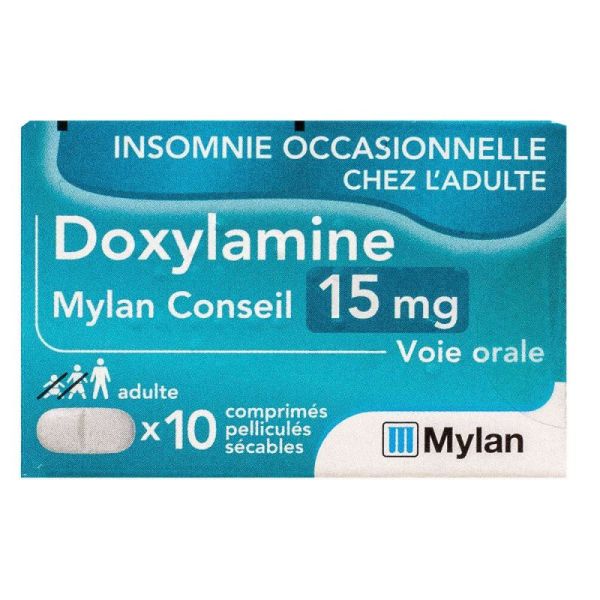


 Medications
  Parapharmacy
  Specials
 Offres exclusives
 Brands